Team 7415 | Jaguar Robotics

NOAH’S ARK.

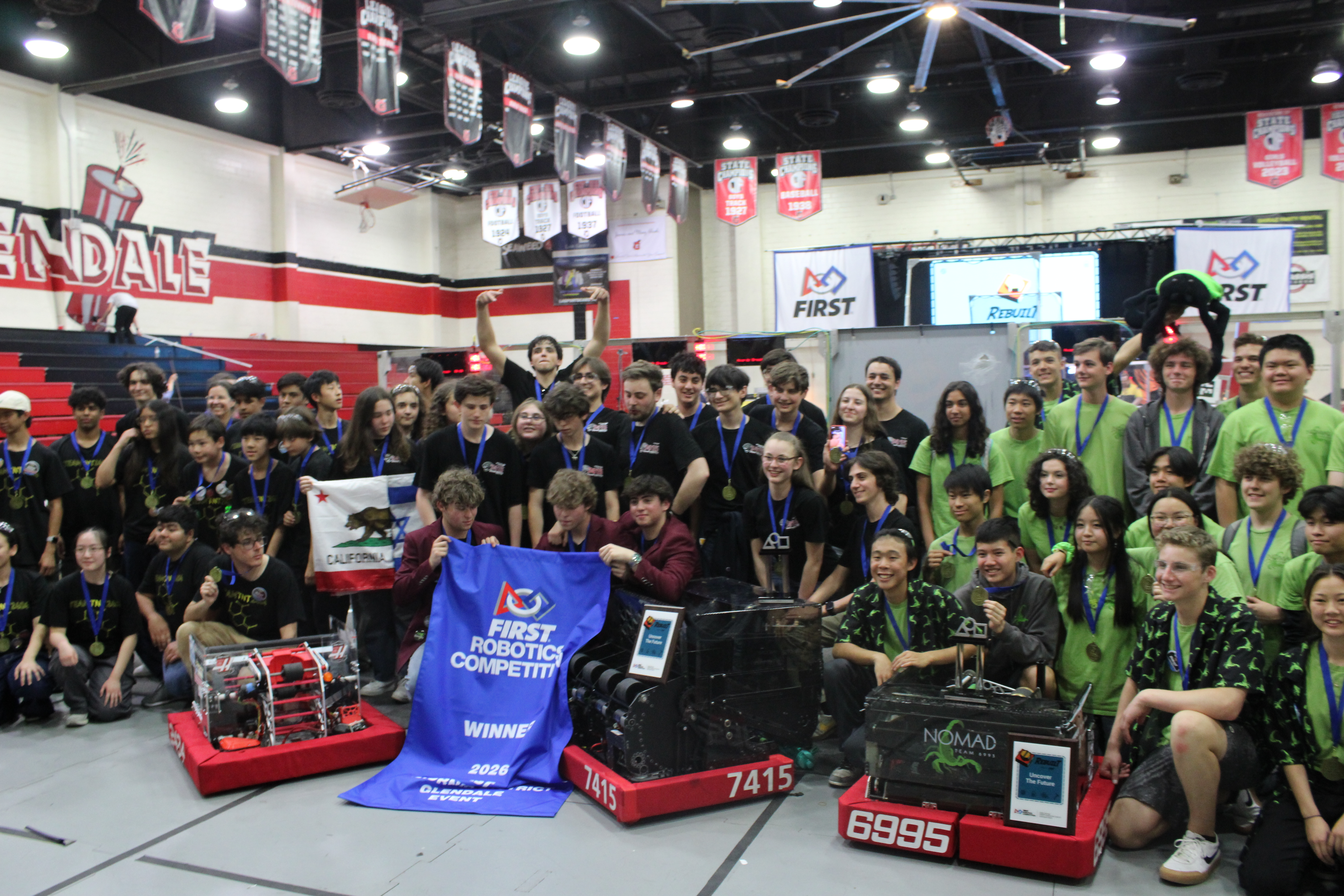
2026 Rebuilt · Glendale Winning Alliance · Blue Banner

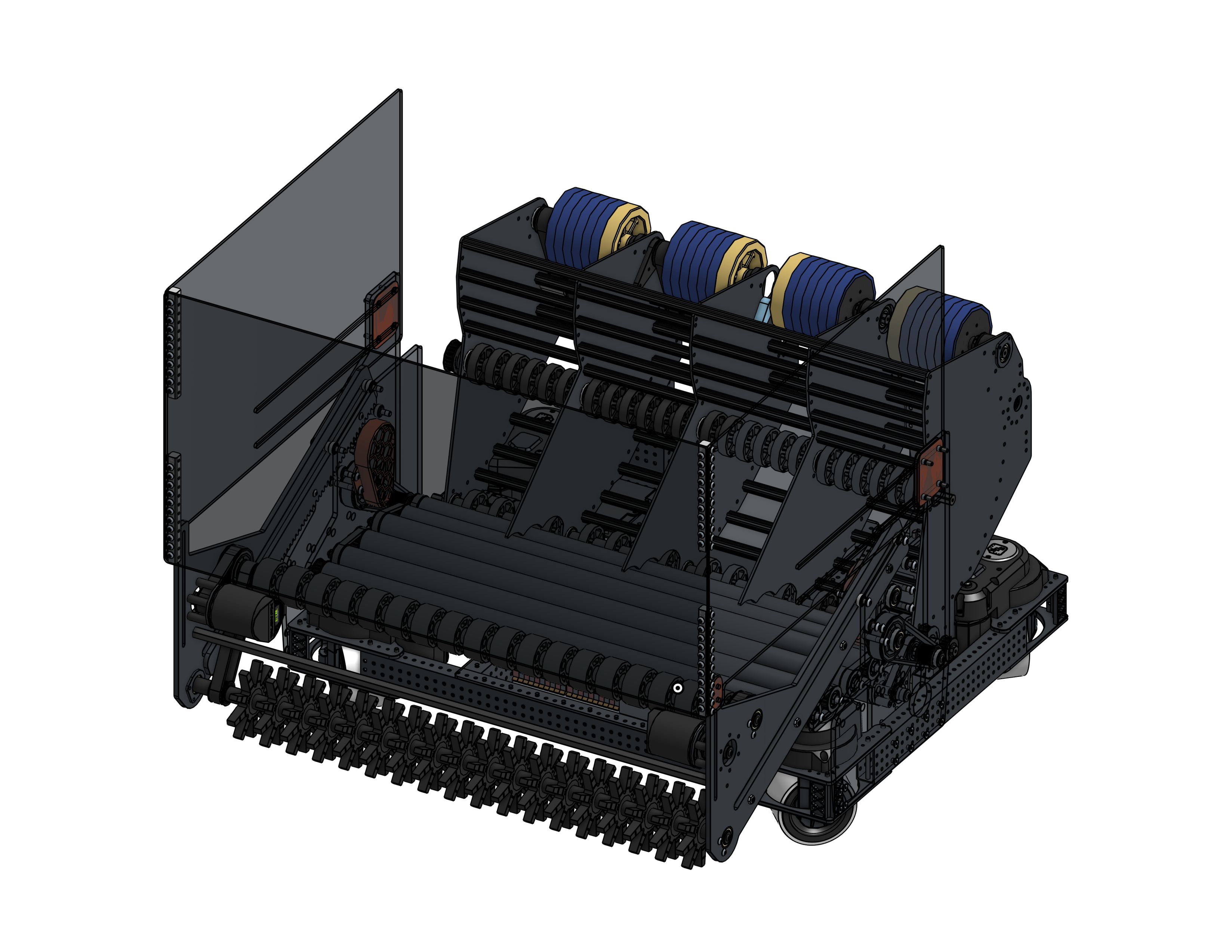
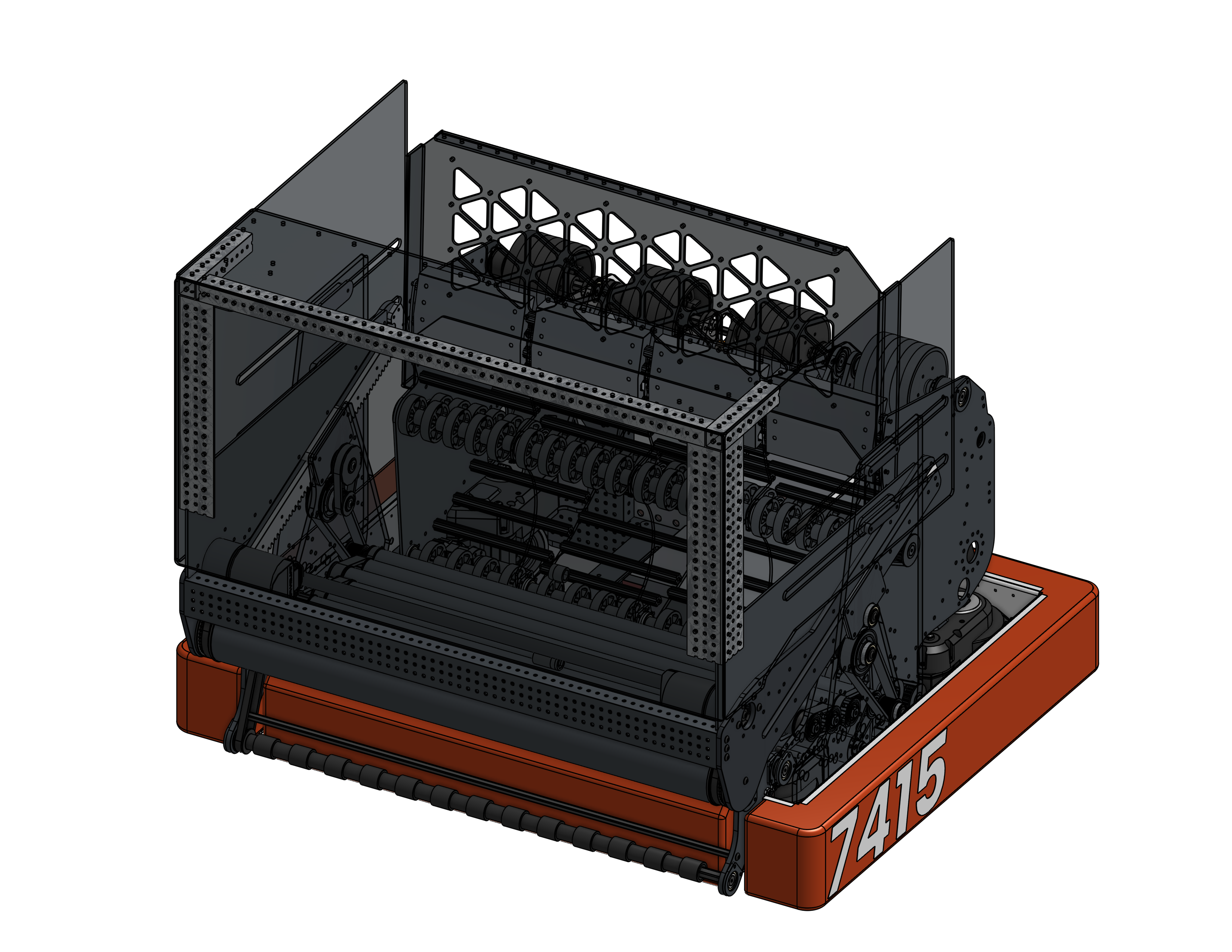
Full render of Noah's Ark, the 7415 2026 robot
~0
Fuel capacity · tall config
0bps
Fire rate · 4 lanes
<0s
Shooter spin-up
<0min
Hopper swap · 8 bolts
0×LL4
Full-field localization

Contents

Index
Strategy · 00

Game Analysis

REBUILT presented two major scoring objectives: shooting fuel into the Hub, and climbing the Tower during auto and endgame. We designed around the first, and around the field's two big constraints: the trench and the bump.

Robot Goals · Hit & Miss

We wrote these on day one of the season, at kickoff, before a single part was CADed. Here's every goal we set and how it held up against reality.

✓ made the robot✗ cut or missed

General

  • As low a CG as we can manage
  • Reliable: fully functional in at least 9 of 10 matches

Mobility

  • Effortlessly enter the neutral zone
  • No getting beached
  • Deal with defense
  • Fast and agile

Software

  • Localized
  • Track the Hub
  • Pre-programmed teleop actions
  • Object detection
  • Drive team feedback
  • Keep the driver stupid simple

Object detection turned out not to be needed, and that time was better spent on the rest of the robot's code.

Auton

  • Intake the depot
  • Load from the human player
  • Hang
  • Shoot 90% effective

We dropped human player loading once we realized a good human player shoots 80%+ on their own. The robot's auto time is better spent racing to floor fuel and holding onto it. Hang died with the climb.

Intake

  • 25″ acquisition area
  • No jams, 100% of the time, at full robot speed
  • Touch it, own it
  • Robust
  • Ground pickup

Touch it, own it was about denial as much as speed: if a graze is as good as a grab, we win every contested ball and the other alliance never gets it.

Storage

  • Maximize fuel capacity
  • No jams

The Swapper holds ~100 tall and ~60 in trench config.

Transfer

  • Shoot with one ball or many
  • 8 balls per second minimum

Four independent lanes ended up doubling the goal at 16 bps.

Shooter

  • 80% effective anywhere in the alliance zone
  • Angle adjust
  • Shoot while defended
  • Shuttle from the neutral zone

Angle adjust lost to simplicity: adjusting flywheel speed at a fixed angle turned out to reach almost anywhere, so the extra mechanism was never worth it.

Climb

  • Level 3
  • De-climb in under 1 second
  • Center or side

Cut early, and on purpose. Traversal RP can't be soloed, so a climber only pays off if a partner climbs too, and that's a bet you can't make at alliance selection time. A Level 3 mechanism would have eaten weight, hopper volume, and build hours, and the endgame seconds it buys score less than just shooting fuel until the buzzer. No regrets.
Ranking Point Analysis

  • =Energized & Supercharged RP share one objective with different thresholds. Design for both at once.
  • ×Traversal RP can't be soloed. Not worth designing around and hoping for a compatible alliance partner.

Fuel Denial

  • Shooting doesn't take fuel out of the game. Scored balls return to the field, so the only fuel you truly control is the fuel you're holding.
  • A full tall config keeps ~100 fuel locked away from the other alliance while we line up our shots. Sweeping fast and holding big starves opposing cycles.
  • The other half is winning the race to loose fuel. If our intake grabs everything it grazes, contested balls become our balls.

Requirement → Design Solution

RequirementOur Answer
Minimal missed ballsAutomated lineup. Independent shooters keep balls from hitting each other midair.
Go over the bumpCAD simulations ensure the wheels contact the bump first.
No-jam, no-deadzone hopperBall flow simulated in CAD. Kicker roller runs faster than the bottom roller.
Fit under the trenchShort hopper config fits under the trench while extended.
Hold 90+ ballsTall hopper config at max height stores ~100 fuel.
"Touch it, own it" intakeGrip tape roller for max grip; kicker keeps constant contact.
<5 second hopper dumpQuad shooter makes shooting 4× as fast; the hopper contracts as balls shoot.

Drive Base

  • 23.5″ × 31.5″ rectangle to maximize intake/shooter size
  • SDS MK5n swerves geared to R2 to balance top speed and acceleration

Lintake

  • Linear intake for easy deployment
  • 5+ fuel wide to maximize intake capability
  • Powered kicker roller for max efficiency

Hopper

  • As big as possible for maximum fuel storage
  • Net ensures balls don't fly out

Shooter

  • Quad shooter to maximize balls per second
  • Independently powered for complete accuracy
↑ Back to contents
Strategy · 01

Impact

The robot is half the team. These are the impact goals we chased this season: the programs we started, the events we ran, and the communities we reached.

Started

Project F.O.R.T.I.S.

  • Started after the October 7th attacks: 15 new teams, 10 FLL and 5 FTC, in the Sha'ar HaNegev region by the border of Gaza
  • Mentors are trained alongside the students so the teams stay strong after the first class moves on
  • 80 team spots opened, enough for 1 in 20 students in the region
Started

FLL Grant Program

  • Raised $7,000 from sponsors to give 7 teams $1,000 each to start an FLL team
  • Short application, made to maximize participants
  • Support from our team throughout the season is part of the grant
Reached

Global Robotics Mentorship

  • Partnership with RoboActive of Dimona HaDarom, Israel, running since 2022 with multiple exchanges
  • The team financed 100% of the students' travel fees
Reached

ORT Project

  • Partnered with ORT to start 3 pilot FLL teams for the 2026 season out of their community center
  • STEM opportunities for 30 students, with classes starting next season
Reached

Girl Scout Badge Workshop

  • Condensed the badge curriculum so each badge takes about 45 minutes: an Arduino coding workshop, a paper airplane design challenge, and a game reveal simulation
  • The program costs $50 per scout; our team covered 90% of it
Reached

Society of Women Engineers Club

  • Started the deToledo High School SWENext Club and ran a school event with robot demonstrations
  • Attended the SWE Conference in late October and presented to 300+ students
Ran

FLL Qualifier

  • Entirely student run, planned, and executed from start to finish, from volunteer coordination to tournament directing
  • Over 300 people in attendance; 30 volunteers served a total of 340 hours
  • Asked by SoCal FLL to host another tournament in the off-season
Started

STEM Night

  • Hosted 3 guest speakers talking about their unique fields in STEM
  • Booths to intrigue guests and teach STEM, plus an Alphabot demonstration with the team
Started

Spirulina

  • Built 2 devices to aid in farming spirulina, feeding 200+ people
  • Improving spirulina growth creates better harvests and maximizes the food supply
Started

LAUSD Region

  • Volunteered at a tournament and realized mentors need improved training; we currently mentor 5% of the region
  • Connected with the I Am Foundation lead for FTC to improve events and the team experience
Started

Religious Teams

  • Female-led programs that engage 20 girls per class
  • Only 2% of Orthodox Jewish girls go to college, so we give an introduction to the STEM world
  • Slowly expanding to more schools, including boys' schools, so more religious students can participate
Started

Project VENTURA

  • Worked with the Gene Haas Foundation to raise $12,000 for next season, and $180,000 across the next 10 years
  • 900+ students get robotics access over those 10 years, with 90+ teams soon to be started
  • A current network of 15 student mentors supports next season's 12 teams
Started

Lunch with the Robots

  • 60+ students attended and viewed the robot; 30+ were introduced to robotics for the first time
  • The pilot event was a success, so we are expanding to more local schools next year
Started

Touch-a-Truck

  • 1000+ participants saw our robotics display and engaged with us about FIRST
  • Demonstrated the robot with kids as young as 3 years old
  • Taught the community about our initiatives and who we are
Started

Mentoring and Assisting

  • 10+ teams mentored throughout the year, at all 3 levels
  • We helped with everything possible, from design to portfolio review, including live sessions with the teams
  • Guidance and refinement to help these teams maximize their potential: we helped 2 teams qualify to Worlds
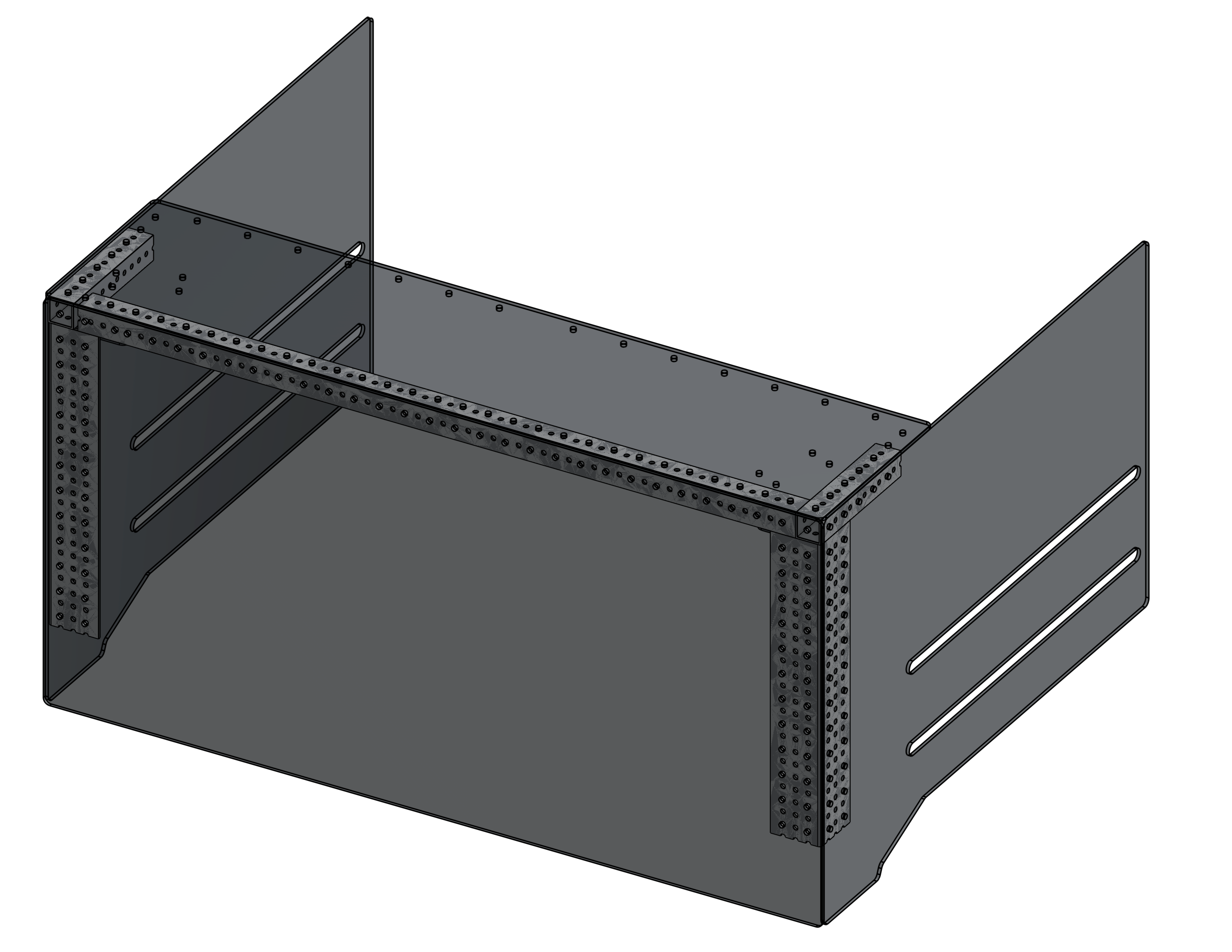
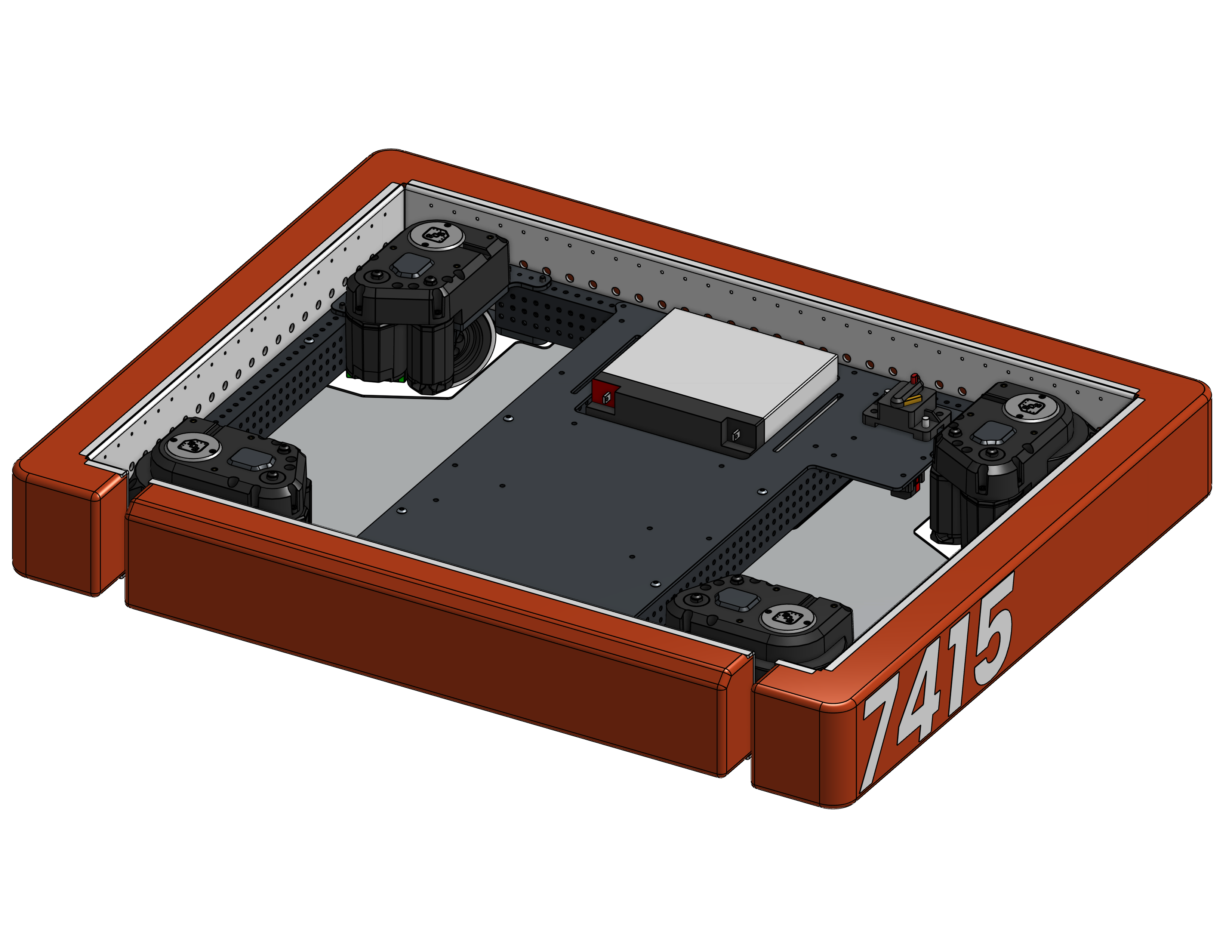
Drivebase chassis render
Mechanical · 02

Drivebase

A 23.5″ × 31.5″ base on SDS MK5n swerves, geared to R2 to balance top speed and acceleration.

Features

  • Rectangle-shaped chassis to maximize intake and shooter width
    • Made from Last Anvil Innovations 7075 aluminum punch tube
    • Superior strength compared to standard punch tube
  • SDS MK5n swerve modules geared to R2
    • Balances top speed and acceleration
  • Upside-down electronics "brainpan"
    • Frees vertical space to maximize the hopper
    • Shock-mounted electronics for an impact-heavy game
  • SWYFT CANnect wiring system to optimize swerve wiring
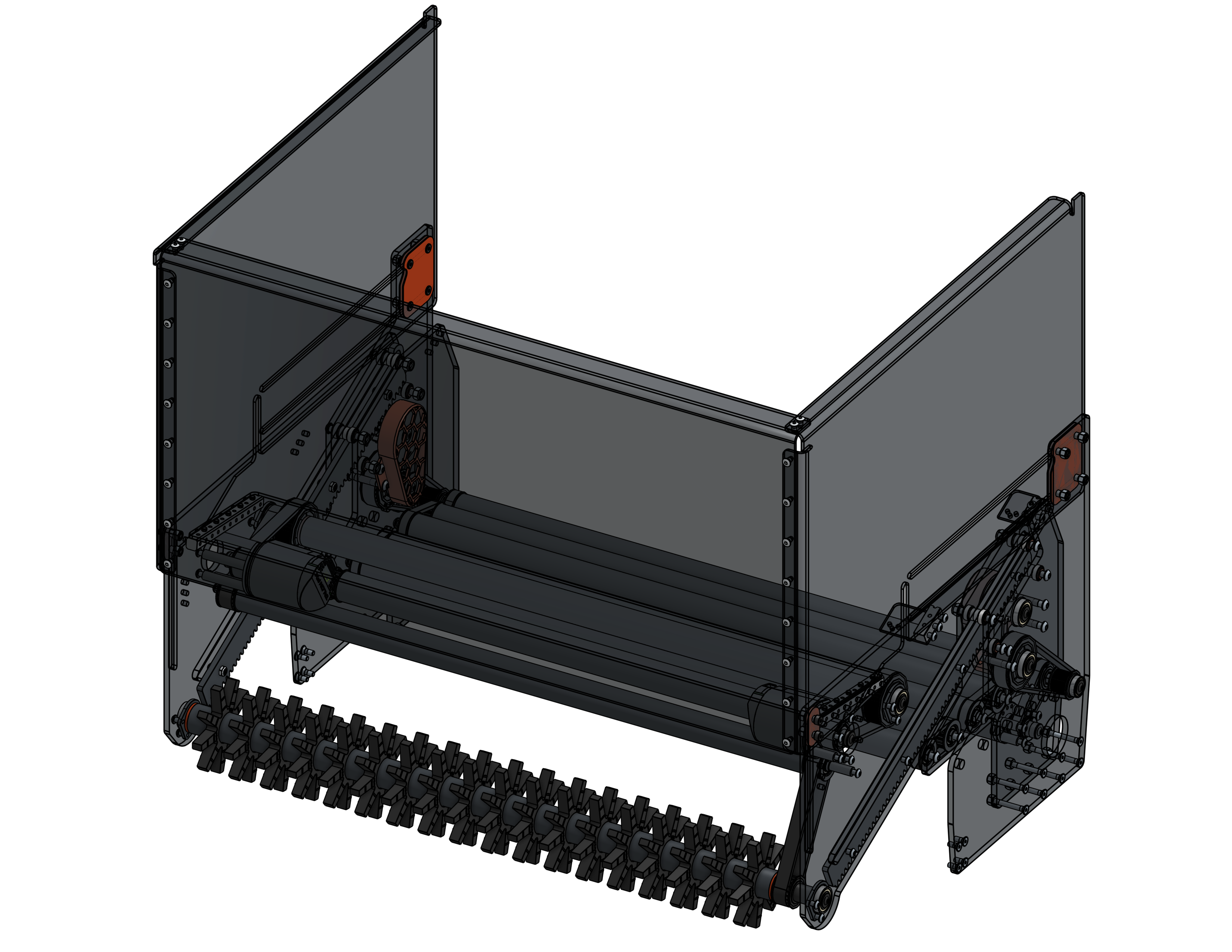
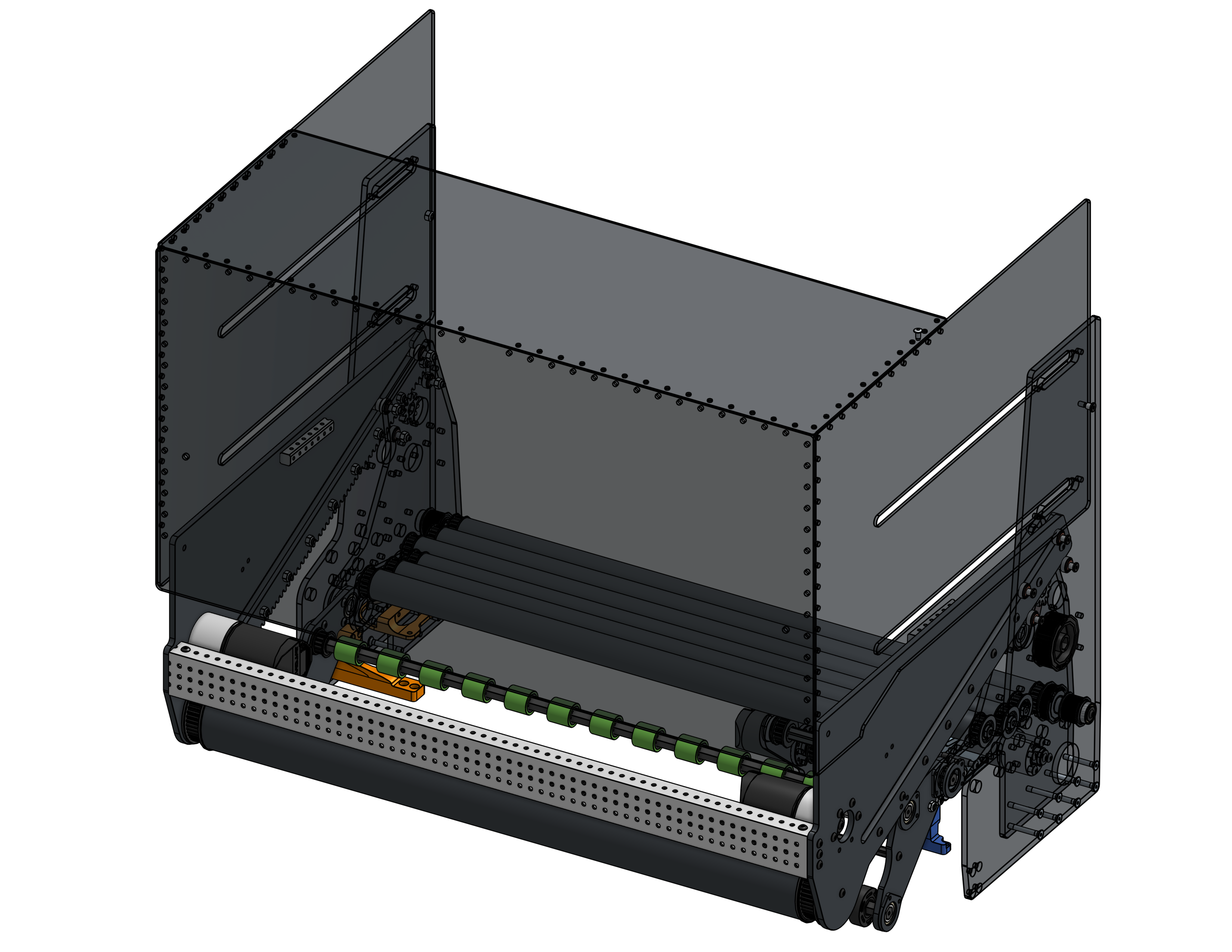
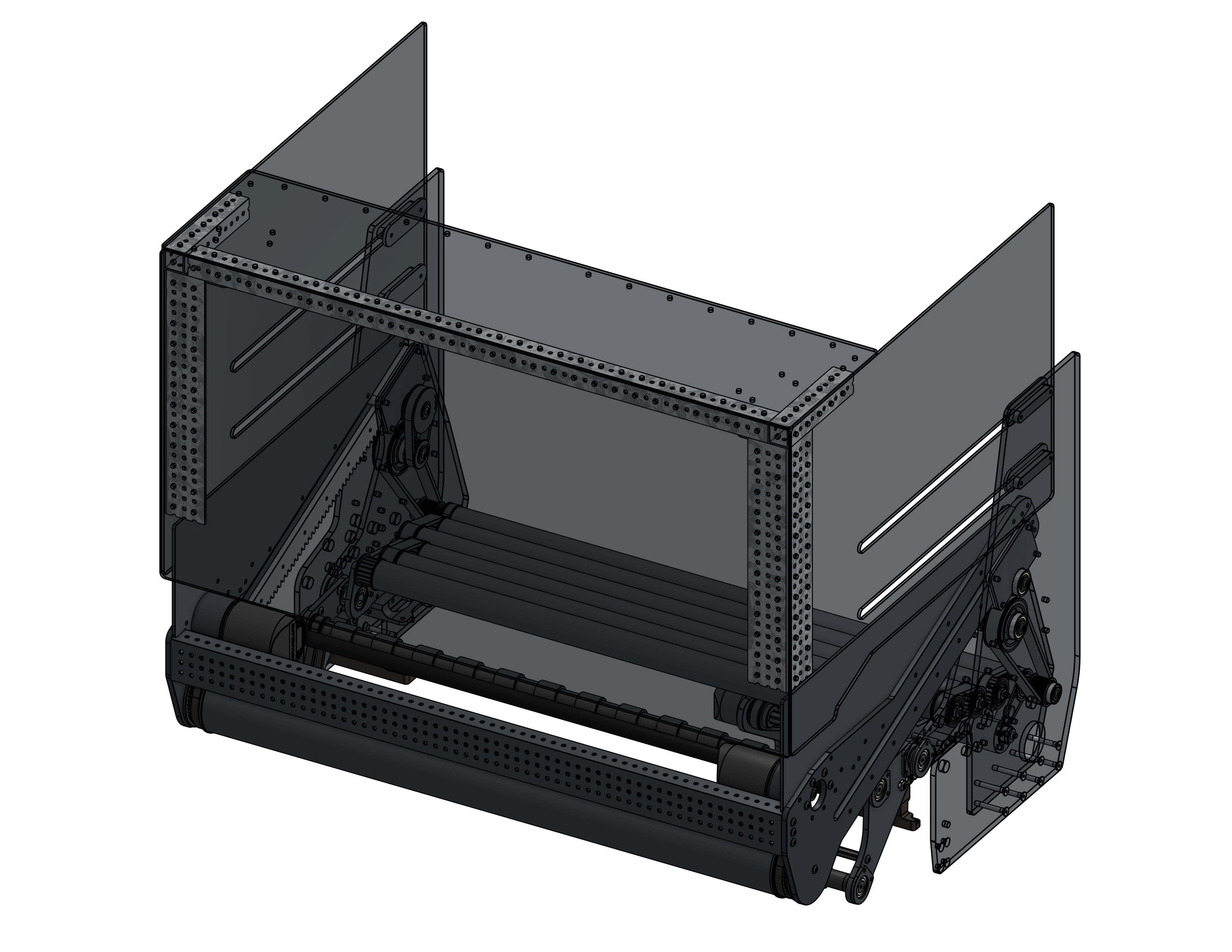
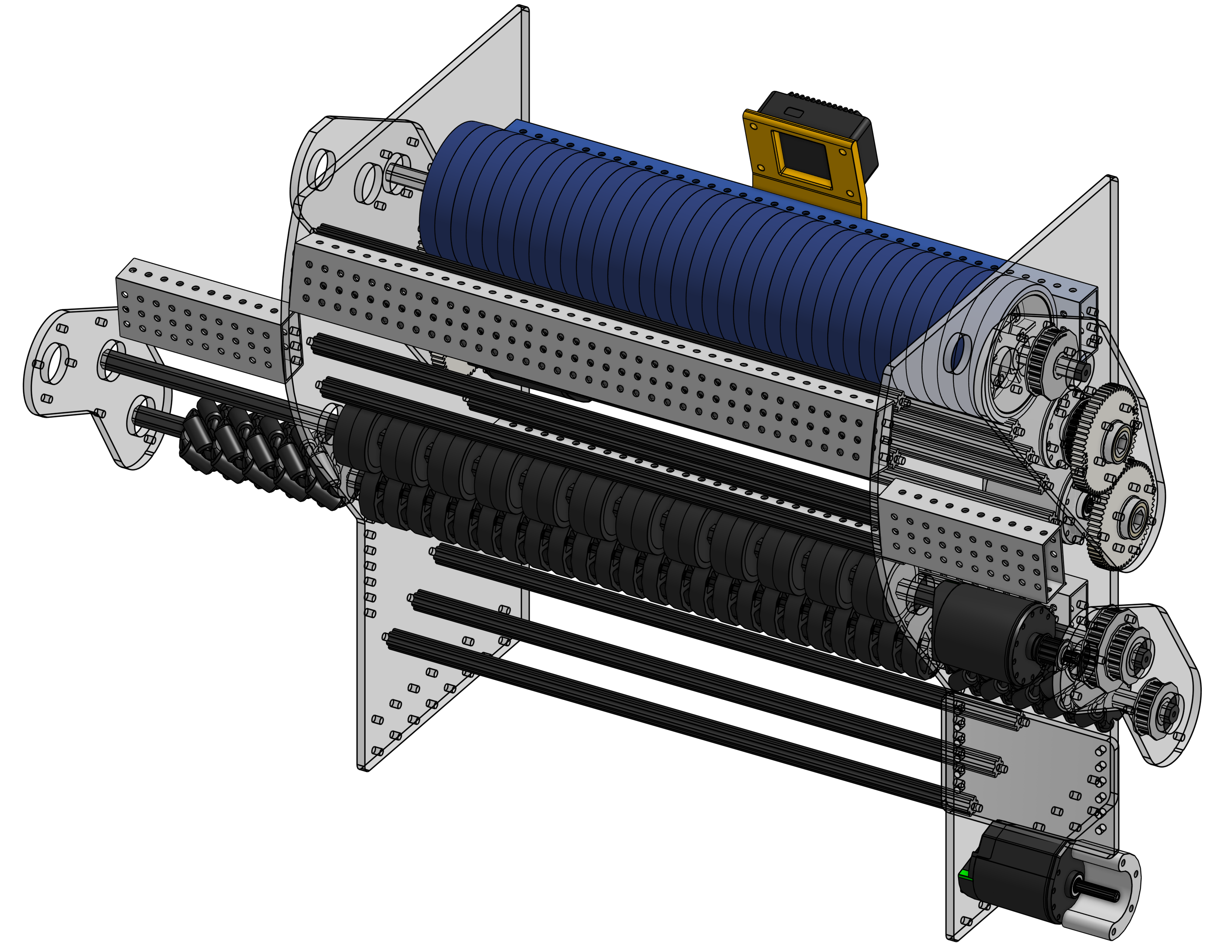
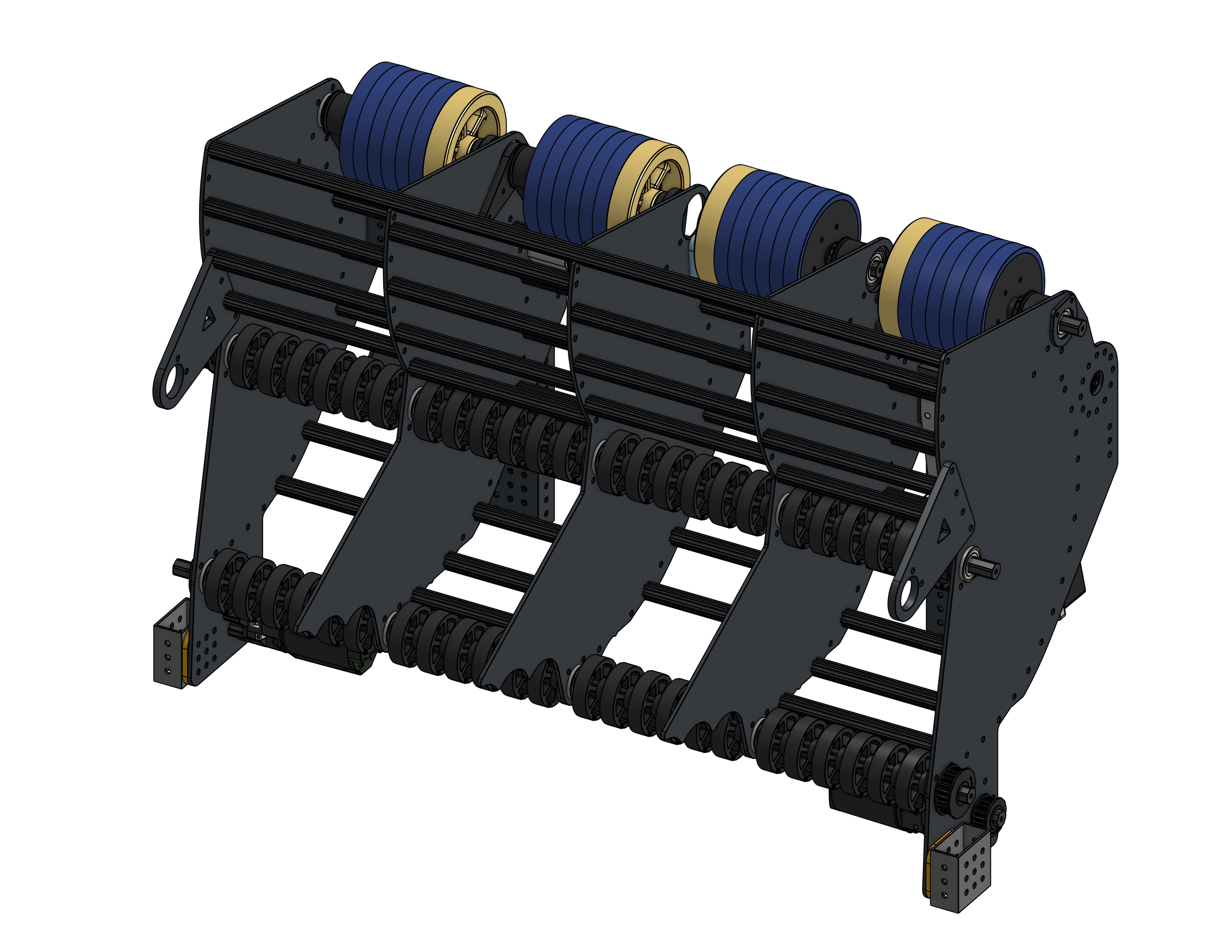
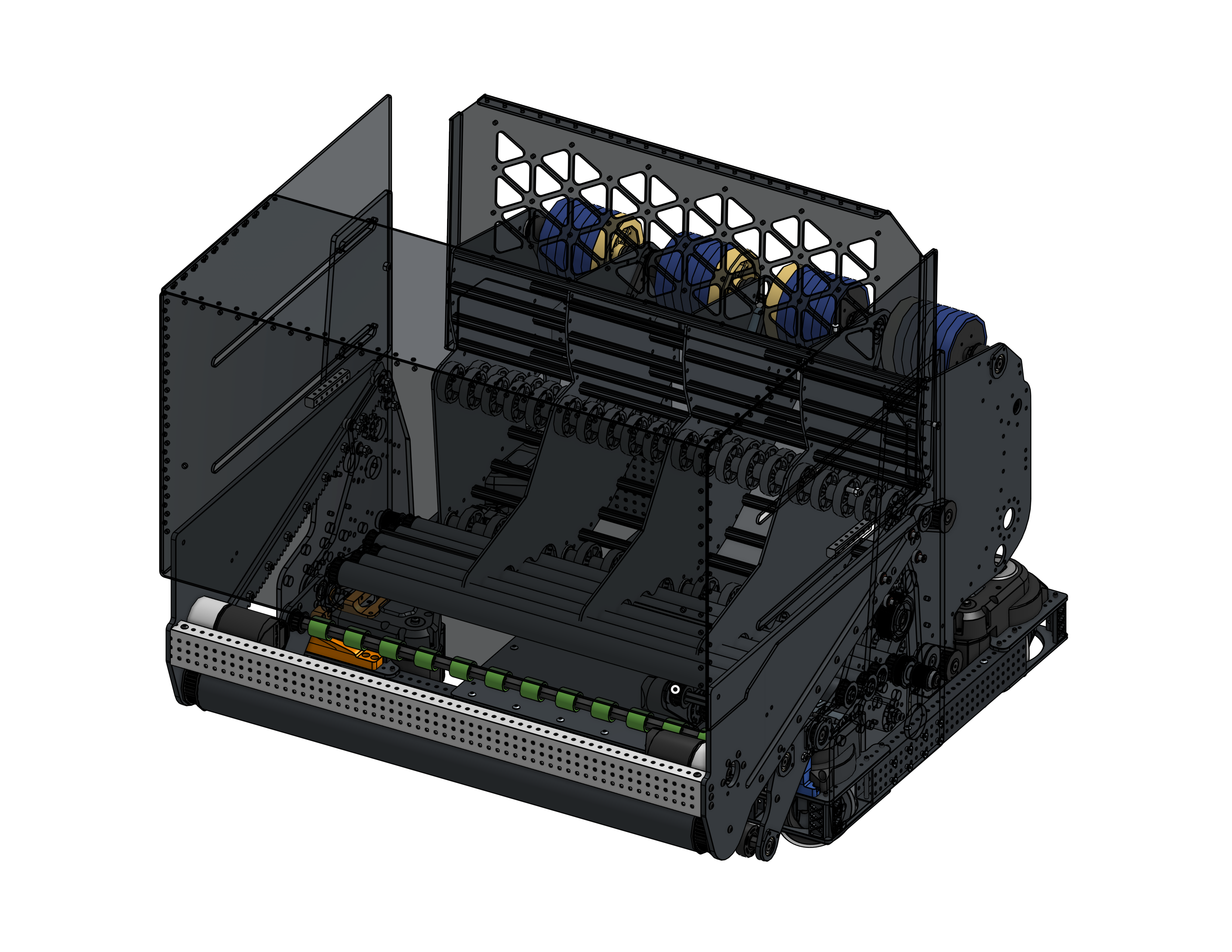
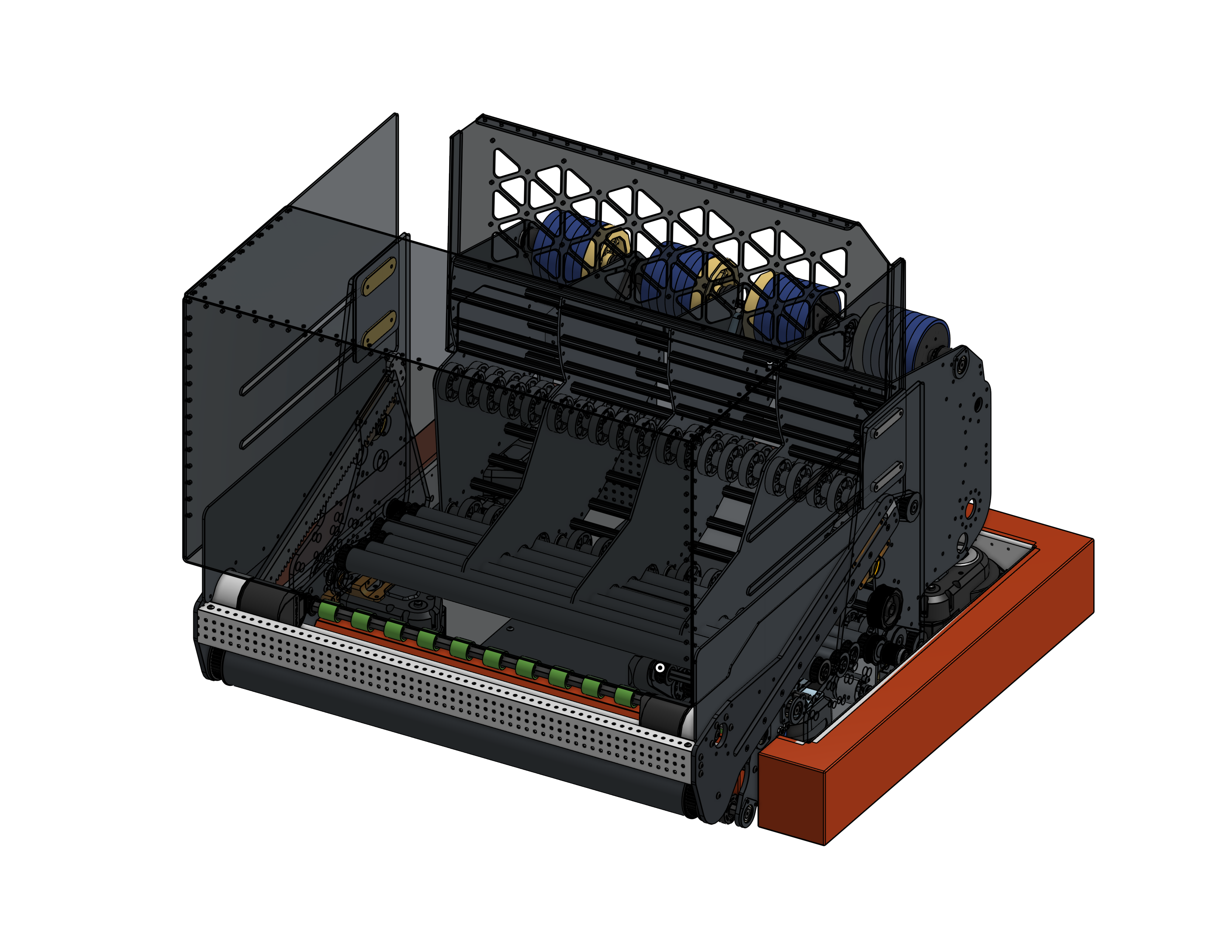
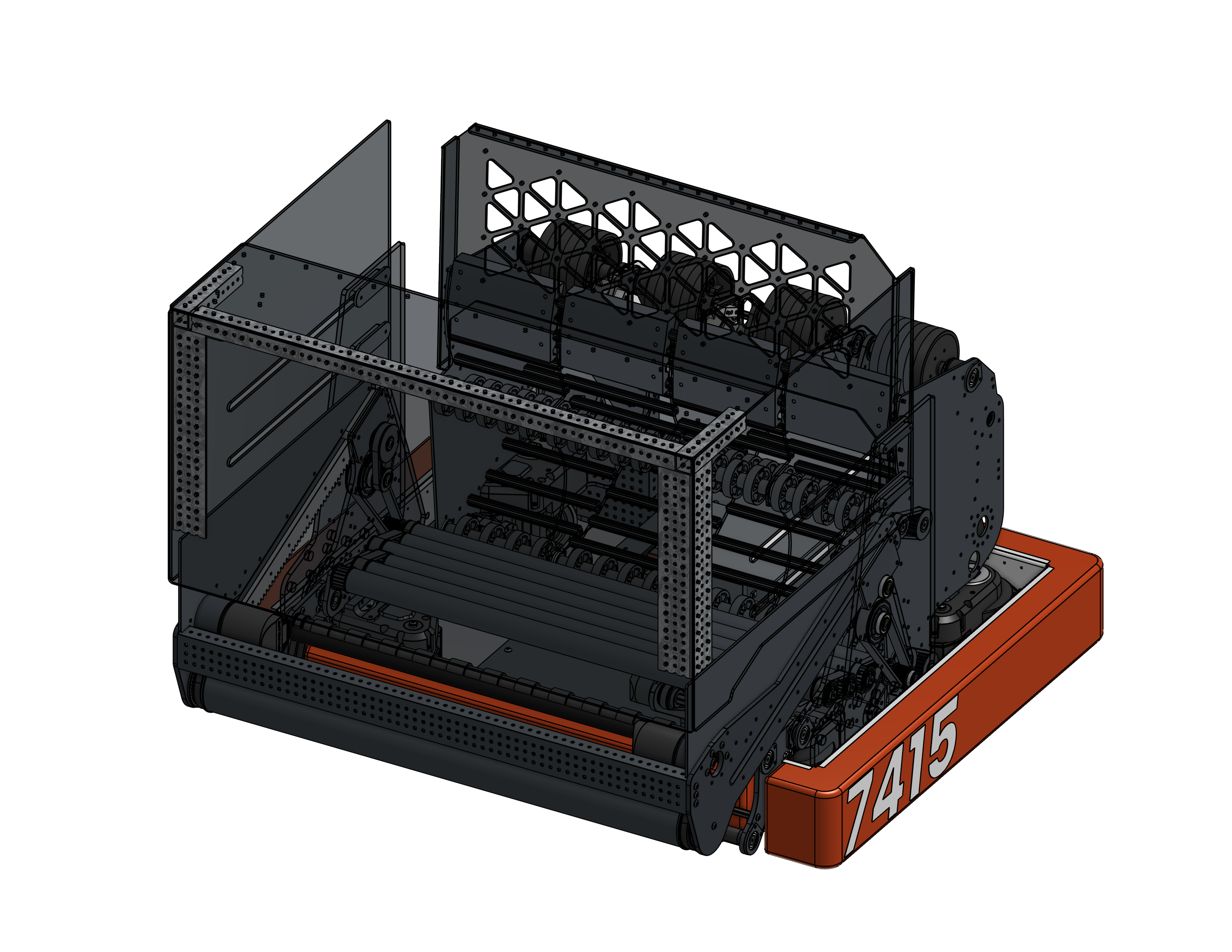
Swapper tall configuration render
Mechanical · 03

Swapper

Contradicting game requirements: hold 90+ balls and fit under the trench? Our answer: swappable hoppers.

Features

  • Tall configuration holds ~100 fuel
    • Max-height hopper for capacity matches
    • Net ensures balls do not fly out
  • Trench configuration fits under the trench while extended
    • Holds ~60 fuel
  • Quick swap in under 5 minutes via only 8 bolts
    • Strategic flexibility between matches
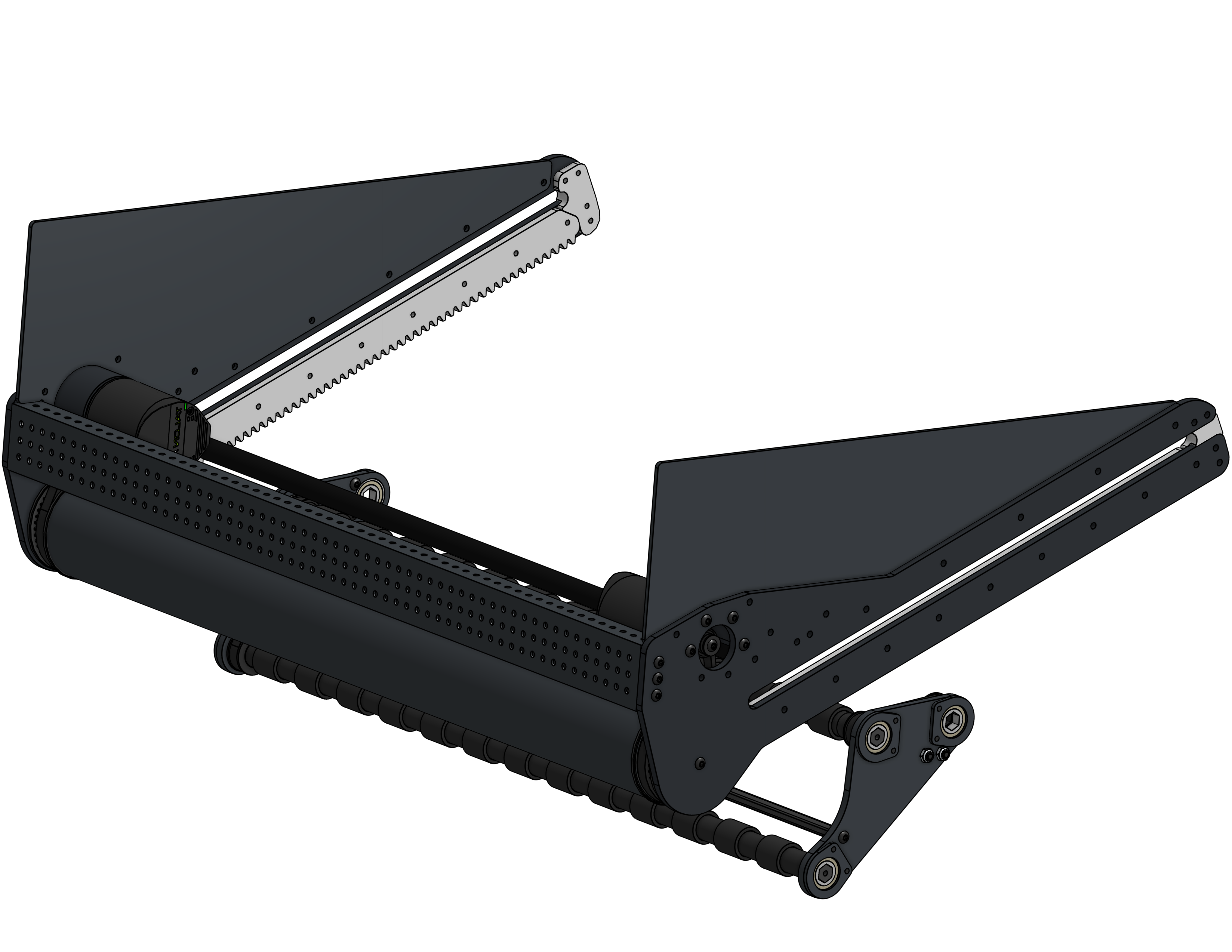
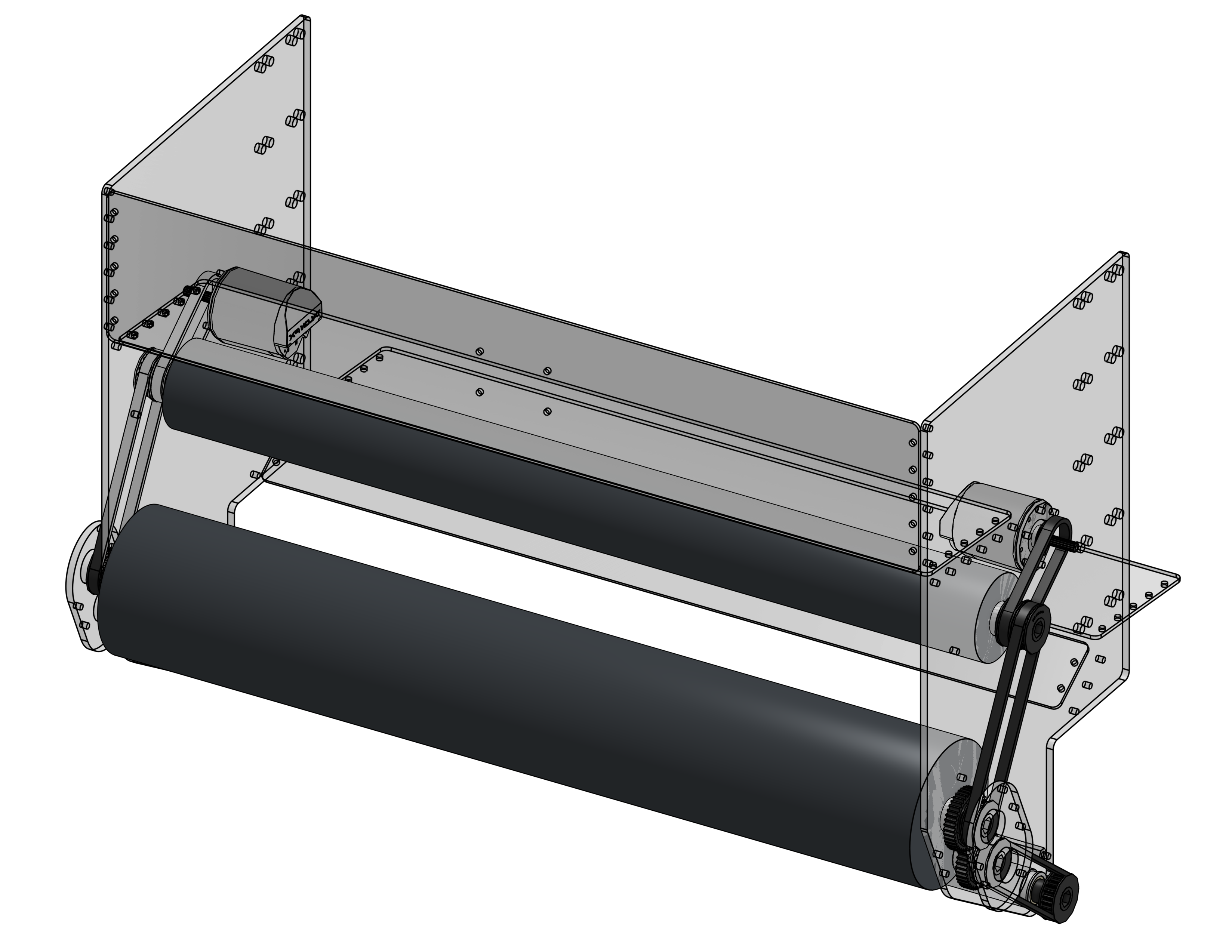
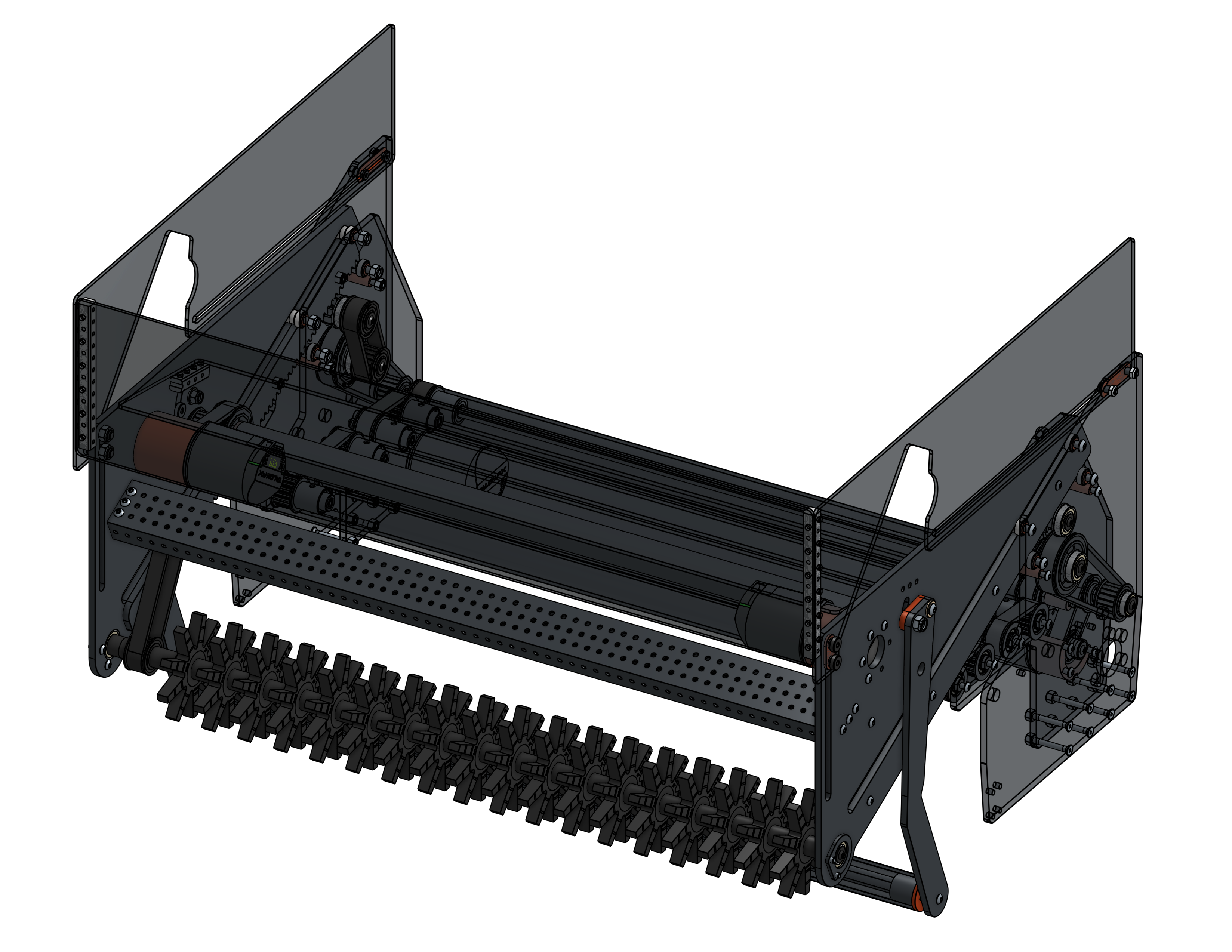
Lintake isolated render
Mechanical · 04

Lintake

A 5+ fuel wide linear intake, five versions deep. Touch it, own it. See the iteration story →

Features

  • 3″ polycarbonate roller wrapped in grip tape for maximum grip
    • Powered by 2 Kraken X60s at a 2.44:1 reduction
    • Custom 3D-printed nylon pulley hubs with stub rollers prevent shaft bending
  • Powered kicker roller keeps constant contact
    • Kraken X44 under the hopper at a 1.67:1 reduction
    • Runs faster than the bottom roller, so no jams and no deadzones
    • Magnet-powered hardstop locks the kicker down
  • Two shafts of 1″ sushi rollers guide fuel up into the hopper
    • Replaced the compliant wheels from earlier revisions
  • "Oreo" extension guides: UHMW with Teflon sides
    • Far more surface area than the bearings they replaced
    • Extension rides an 11T 10DP pinion along a gear rack
  • SRPP plates for robustness
  • Removable gear-rack end stops
    • Easy access for repairs, and the whole intake swaps via 8 screws
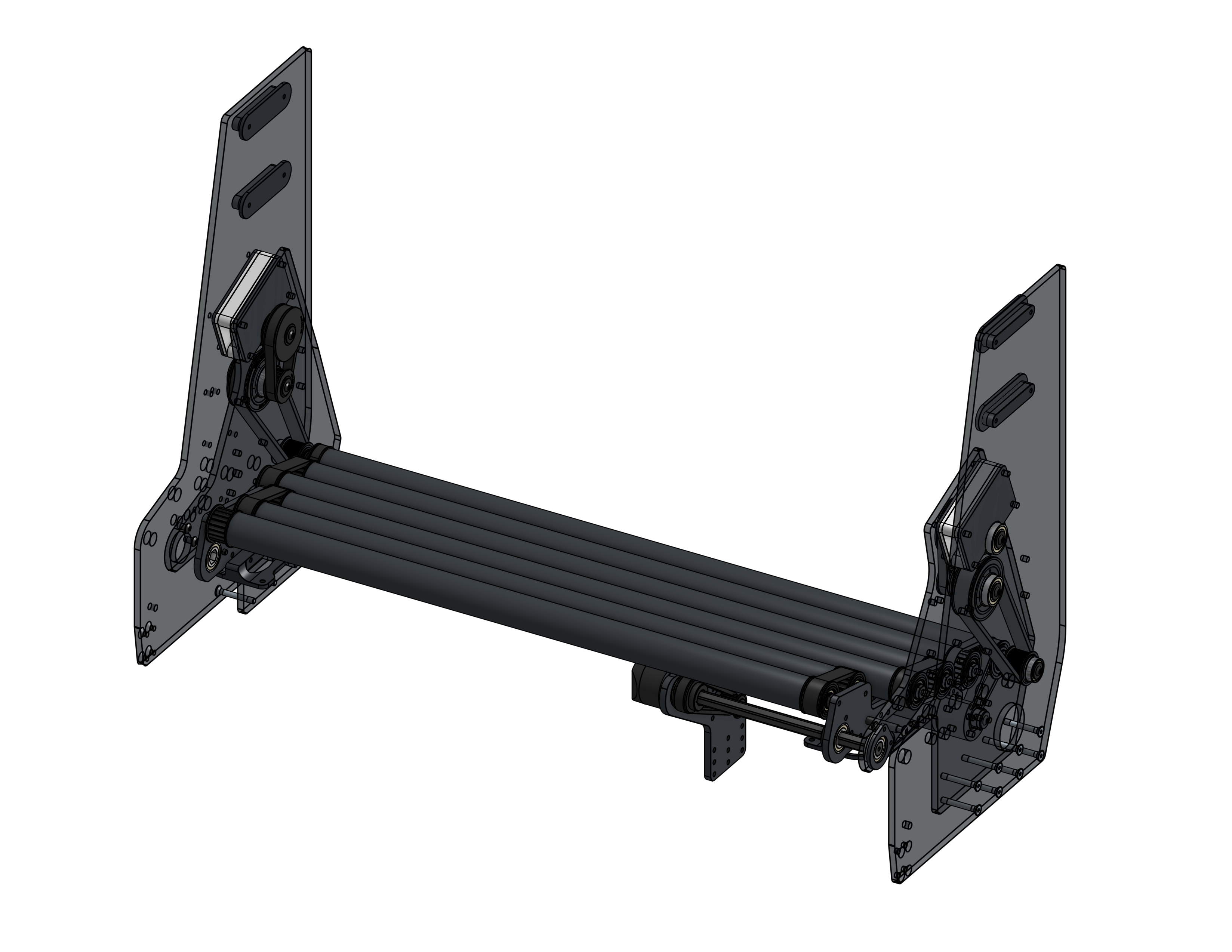
Hopper floor rollers render
Mechanical · 05

Hopper Rollers

Six powered floor rollers. Zero dead zones.

Features

  • 6 stub-roller polycarbonate tubes driven by a single belt run
  • Every ball on the hopper floor touches at least one powered roller
  • "Zombie axle" power transmission powers the Lintake extension
    • Carries the extension power across the robot inside a hopper roller
    • A jackshaft that takes up zero hopper space
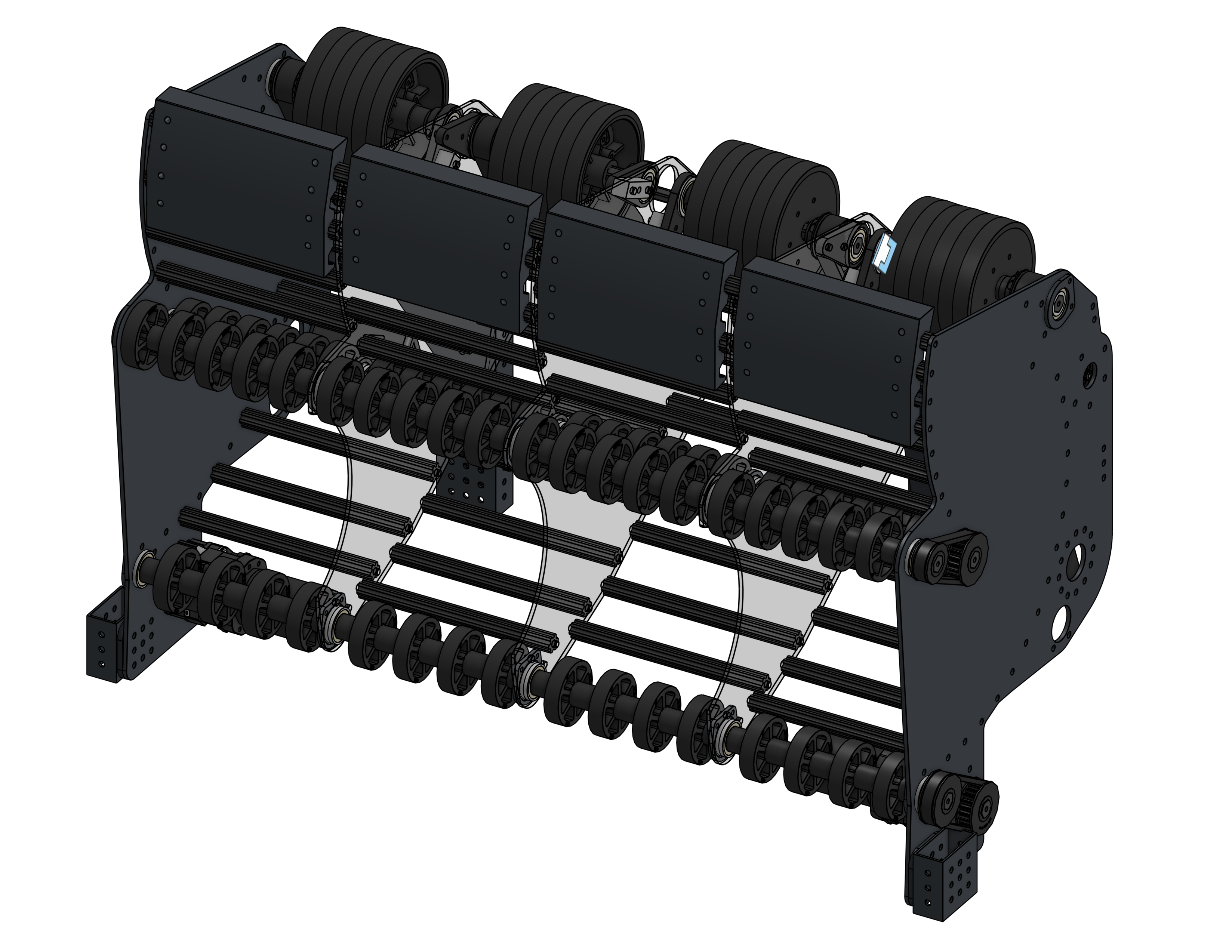
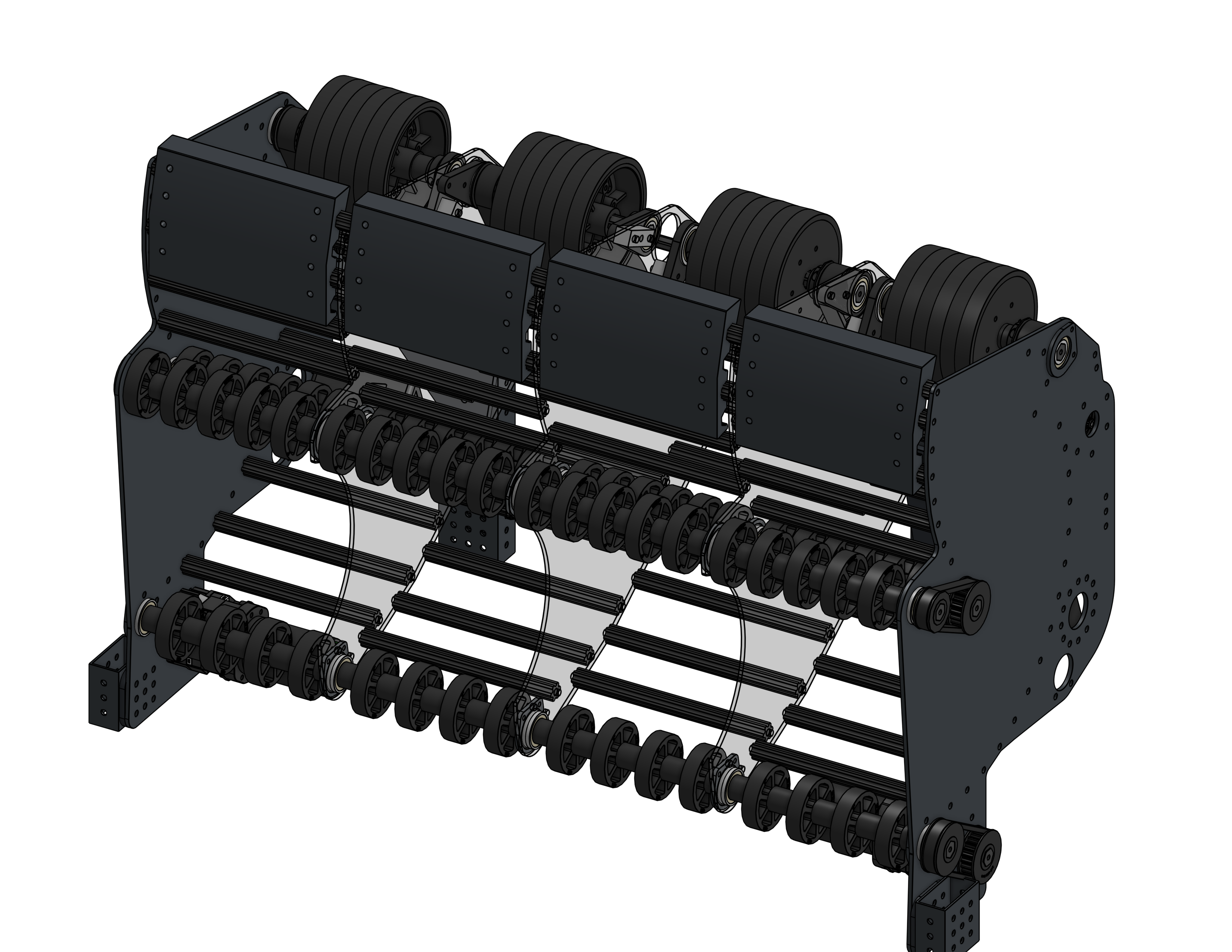
Quad shooter render
Mechanical · 06

Quad Shooter

Four lanes. Four motors. Full speed in under a quarter of a second.

Features

  • Four lanes, each independently powered by a Kraken X60 at 1:1
    • 4″ Stealth wheels with no flywheels
    • Spin-up time < 0.25 s
    • Independent lanes make sure balls don't hit each other midair
  • Completely symmetrical
    • Repeated dimensions across all 4 segments
  • Split feeder: top and bottom powered separately for simplicity
    • 2 Kraken X44s run power from below the ball path
    • Feeds all four lanes
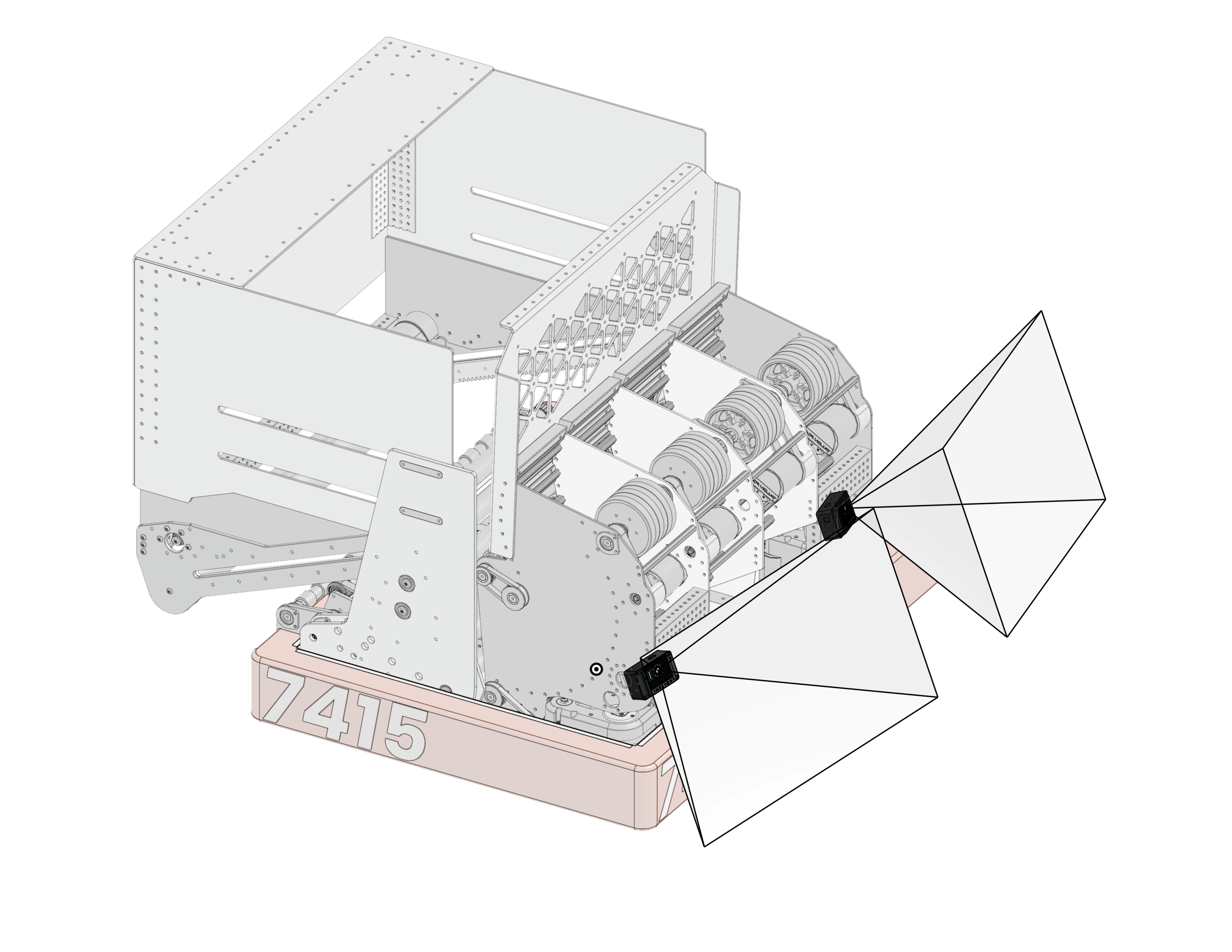
  • 2 mirrored Limelight 4s mounted to the shooter base
    • Maintain pose everywhere around the field
↑ Back to contents
Software

Software

Our programming team is very new to Java and to FRC programming as a whole, with no code mentor. So we kept the stack simple: tools that are easy to implement, with Claude helping us write and debug code along the way. That left time for what we actually cared about, which was automating everything the driver shouldn't have to think about.

"Two button controls": intake and shoot.

We switched to state machines this year, which made it really easy to change states and what each one does. The robot state switches on driver input and tele-op automation (usually also with driver input). We built on CTRE's Swerve Generator, plus their Elevator Generator for the Lintake.

State Machines CTRE Swerve Gen CTRE Elevator Gen Claude
Software · 07

Current Limits

Through every comp up to Worlds we struggled with brownouts. So we current limited fairly hard, and at Worlds we had zero battery issues.

Limit Hard

  • Aggressive supply limits across the robot
  • Switching to Energizer batteries helped too
  • Limits went in late in the season, mostly through Phoenix Tuner

Find the Power Draw

  • Testing showed the kicker takes the most power of anything on the robot

Spend It Wisely

  • We had a top 3 auto at SoCal DCMP and weren't going to lose it to a current limit
  • The kicker keeps a high supply limit during autonomous, then the limit drops once teleop starts to avoid brownouts
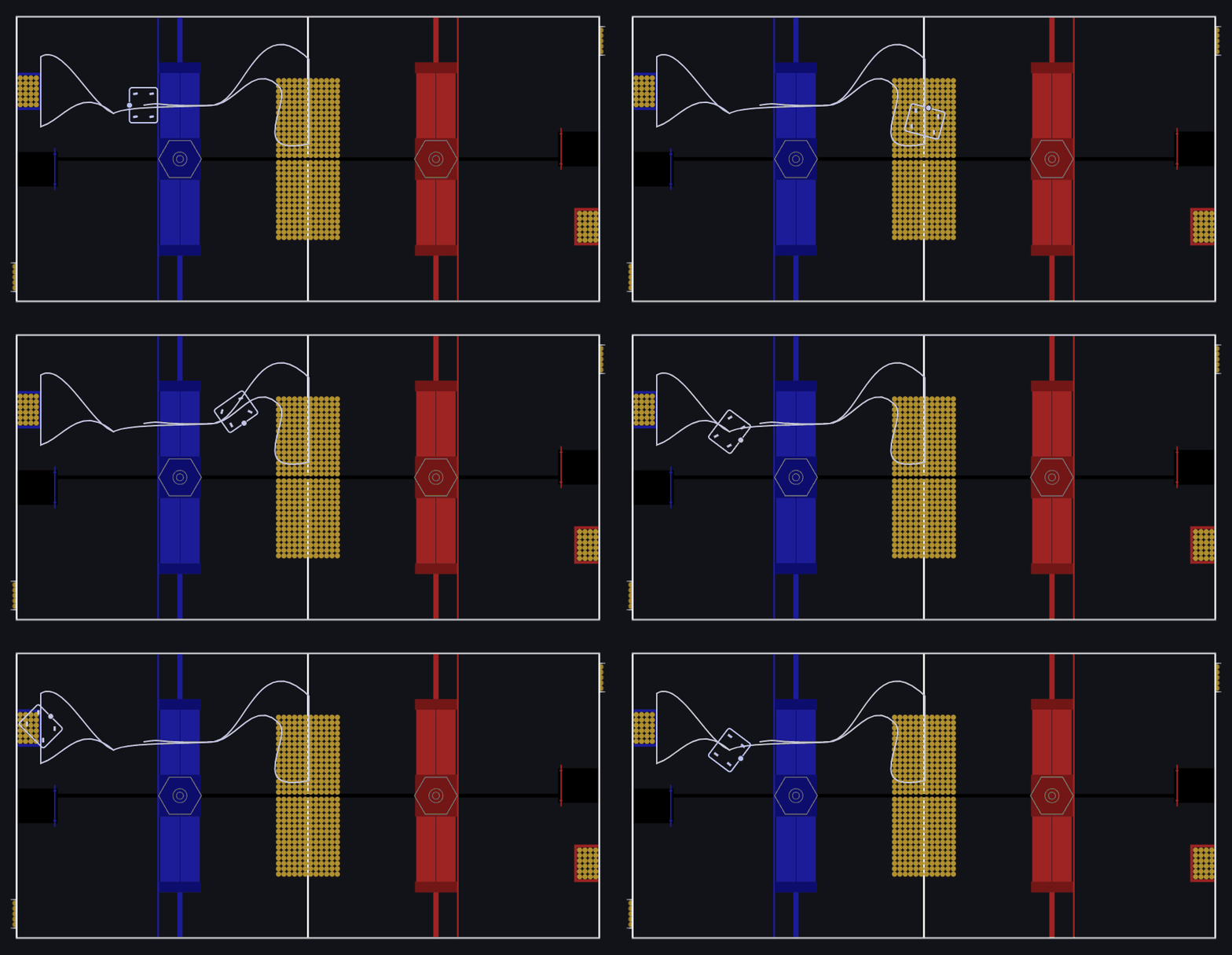
Autonomous path: single middle swipe to depot on the tall robot configuration

Single middle swipe to depot on tall robot configuration

Software · 08

Autonomous

Built with PathPlanner, which let us create paths for both sides, tall and short, very quickly: 12 total autos.

Approach

  • One of the fastest bots to the middle in all of SoCal
    • While in short config
    • Autos cruise at 4.5 m/s, but the initial charge toward center runs at max speed (5.12 m/s)
  • Put up ~80 on both tall and short
  • On tall, we liked to run a single mid swipe, then the depot
    • Leaves space for robot #3
  • On short, we ran a double swipe
  • An auto for every scenario
    • Both sides, trench and bump
    • Tall and short configs
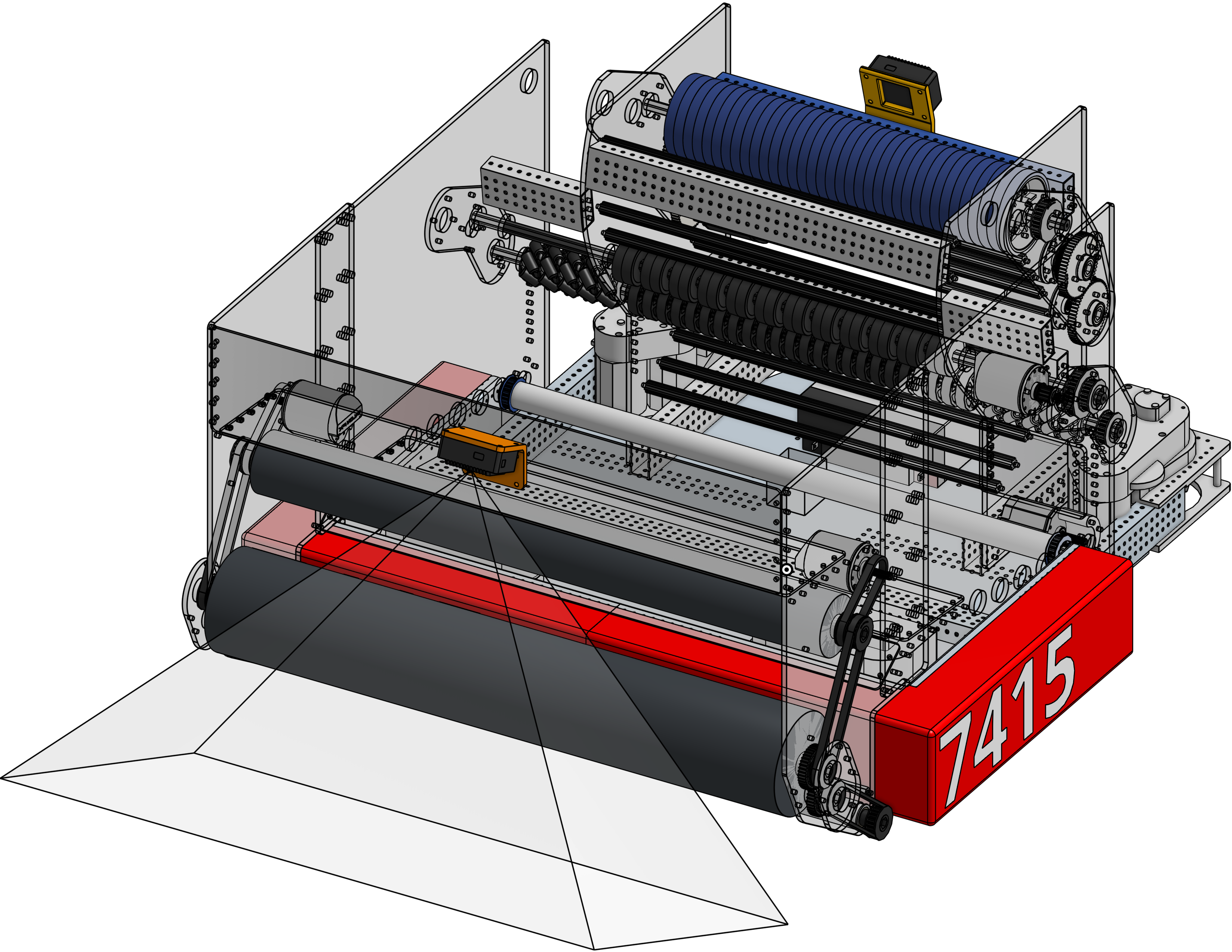
Top-down view of dual Limelight camera coverage
Software · 09

Vision

Two Limelight 4s on the front of the robot, facing the Hub while shooting.

Setup

  • 2 Limelight 4s on the front of the robot
    • Positioned to face the Hub while shooting
    • Mirrored to maximize combined FOV with full coverage
  • Ideally we would have had a third to help during auton
    • It ended up being fine without it
  • Vision re-localization everywhere it matters
    • Auto-align to the Hub
    • Re-pose after going over the bump, which is critical for auto
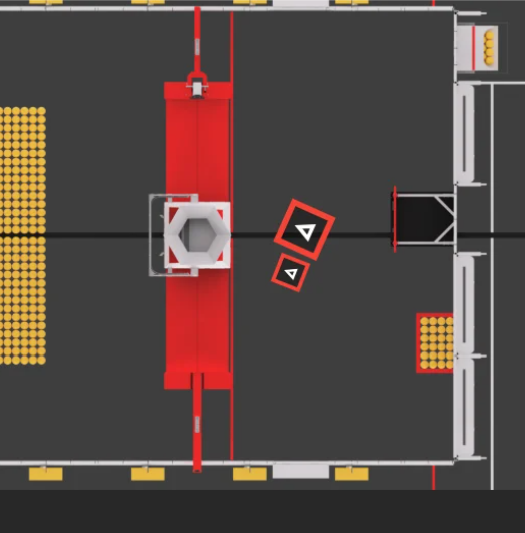
Shoot on the move in action: the large square is the current robot pose, the small square is the extrapolated pose

Our SOTM in action: the large square is the current robot pose, and the small square is the extrapolated pose

Software · 10

Shooter Automation

Press shoot. The robot spins up to speed, angles itself, then starts feeding and scoring. Everything else is math.

How it works

  • Shooter speed comes from an interpolation table with 6 points
    • At Worlds we realized we were undershooting a little, so we added a constant 1.02 multiplier to shooter speed
  • Each shooter's distance from the Hub is calculated independently
    • Each lane is powered accordingly
    • In practice the outside shooters matched each other, and so did the inside pair
  • Shoot on the Move via pose extrapolation
    • Find the fuel's time of flight from an interp table, extrapolate our pose forward that amount, then aim as if the robot were in that position
    • By Worlds our BPS wasn't good enough to be a great dumper, so we relied on great SOTM to be successful
  • The robot refuses to waste fuel
    • It automatically stops shooting if SOTM can't score, like when driving into the corner of our alliance zone
    • Spin-up and aim get re-checked constantly while SOTMing, and feeding stops if either would miss
Software · 11

Controls

As simple as possible: the driver presses two buttons, intake and shoot.

  • JoysticksTranslate / rotate (inputs run through a sine squared curve)
  • Left TriggerIntake
  • Right TriggerShoot (context aware: pass, set shot, or SOTM)
  • YManual outtake
  • XRe-zero Lintake
  • D-Pad ◂ ▸Manual Lintake in / out (for jam recovery)
  • StartRobot "idle"
  • Sine squared joystick curve
    • Makes extreme inputs more sensitive (low and high joystick %)
    • The robot automatically slows down while in the tower and while SOTMing
  • Lintake re-zeroes itself every time it fully retracts
    • That only happens after a stationary shot where it fully retracts, which barely ever happened, hence the manual button
One shoot button, three behaviors.

Outside our alliance zone: outtake to pass. Our passing through the shooter was very bad (no hood plus backspin means balls don't go far), so we pass by reversing the intake and hopper floor instead.

In the zone, stationary: shoot with the wheels X-locked. The intake compacts to push balls into the shooter, with different timings for tall and short config.

Driver moving: switch to Shoot on the Move targeting.

Aim → Spin-up → Feed
The trim controller.

The operator (drive coach #2) carries a trim controller: manual shooter speeds, increase/decrease shooter power, and targeting adjustments. He never touched it all of Worlds.

Software · 12

The Graveyard

Code we wrote, shipped, and then deleted. Driver practice beat both.

Bump Align

  • The robot would automatically line up in the center of the bump and rotate itself to the correct orientation
  • It ended up making us a lot easier to defend
  • Driver practice and skill made it unnecessary

Snake Drive

  • At our Glendale district event the robot angled the intake in the direction of travel while intaking
  • It made intaking along the walls very hard
  • With driver practice, intaking on traditional swerve was better and easier
↑ Back to contents
Iterations · 13

Lintake Iterations

Five versions, starting on Alphabot. Every problem in one column got fixed in the next. That's the whole point.

Lintake V1, Alphabot prototyping era

The Design

  • Kraken-powered shafts in laser-cut acrylic let us test lots of compressions cheaply and quickly
  • Compression wheels vs. star wheels, across different sizes
  • Star-wheeled static intake at trench height ran on Alphabot
  • Real motorized intake (no deploy mechanism) bolted on to test intaking while driving
  • Laser-cut and CNC gear experiments for the extension proved gear racks need CNC gears

Problems

  • Star wheel intake was slow
  • Static intake left the robot in an illegal starting configuration
  • No deployment yet, and the real design needed to extend
Lintake V2

What Changed

  • Cut 4″ star wheels as the front roller + two 1.25″ back rollers, powered by 2 Kraken X60s at 2:1
  • Extension motor: another Kraken X60, identical to the hopper motor so both hopper plates stay identical, at a 2.22:1 reduction
  • 11T 10DP gear extends along a gear rack, riding ½″ OD bearings with ⅝″ OD bearings outside the stack to keep it in place
  • Kicker deploys passively via gravity on a bushing and shoulder bolt; the 1.25″ end roller is fully locked and passive

Problems

  • Kicker wasn't deploying consistently, and testing showed we didn't need one (yet)
  • Drew too much power from 4 Kraken X60s
  • The hopper was not sliding smoothly
Lintake V3

What Changed

  • Power fix: hopper rollers and lintake extension switched to 2 Kraken X44s with an increased reduction
  • Sliding hopper: two slots instead of one for horizontal motion
  • Added a vertical front slot so the hopper stays attached to the intake at full height
  • Covered the pulleys to protect them from balls in the hopper

Problems

  • Star wheels were not working
  • Intake was stalling from power issues
  • Hopper binded frequently
  • Front roller shaft bent
  • Intake shattered, held together via duct tape
Lintake V4

What Changed

  • 3″ polycarbonate roller wrapped for grip, powered by 2 Kraken X60s at 2.44:1, and the back rollers were deleted
  • Custom 3D-printed nylon pulley hubs with stub rollers to prevent shaft bending
  • Without star wheels a kicker became necessary, and it became powered (Kraken X44 under the hopper)
  • Compliant wheels in front + 1″ sushi rollers guide fuel up into the hopper
  • Magnet-powered hardstop keeps the kicker locked down

Problems

  • Intake slowed down with a full hopper
  • Gear racks wore down and skipped
  • Kicker could pop up
  • Green sushi wheels wore quickly
Lintake V5

What Changed

  • Switched to SRPP plates for robustness
  • Hopper guides made bigger and spaced further apart
  • Hopper disconnected from the intake: no binding, maximum smoothness
  • "Oreo" guides: extension switched from bearings to UHMW guides with Teflon sides, giving much greater surface area
  • Removable gear-rack end stops: easy repair access, intake replaceable via 8 screws
  • Roller wrap switched to grip tape
  • A second sushi roller shaft replaced the kicker's compliant wheels
Iterations · 14

Shooter Iterations

From a drum on Alphabot to four independent lanes. Accuracy won every argument.

Shooter V1, Alphabot drum shooter

The Design

  • 3-wide hoodless drum shooter
  • Powered by 4 Kraken X60s
  • Simple flat plates to confirm early concepts work

Problems

  • Requires lots of inertia for acceptable accuracy
  • Long spin-up time
  • Conclusion: separate the shooters
Shooter V2, four independent lanes

What Changed

  • Drum separated into 4 separate lanes with flywheels, each section powered by 1 Kraken X60
  • Static backing to reduce complexity
  • Simple feeder: top and bottom rollers powered separately to avoid needing a direction swap, with 2 Kraken X60s on feed
  • "Shark fin" dividers sticking into the hopper
  • 2 Limelight 4s on 3D-printed mounts underneath the shooter, tilted up and out to maximize useful FOV

Problems

  • Balls would jam against the static backing
  • "Shark fin" dividers would wobble and snap
  • Printed Limelight mounts would snap
Shooter V3, the configuration that ran every competition

What Changed

  • Flywheels came off to cut spin-up time: each shot is only 1 ball, so we don't need large inertia
  • Added a 3rd feeder roller to prevent jams
  • Removed the "shark fin" dividers and cut into the shooter to maximize the chance a ball hits the feeder roller before the dividers
  • Beefed up the Limelight mounts
  • Added mounting for a potential climb
↑ Back to contents
Evolution · 15

Robot Evolution

One season, five robots. Each one existed to make the next one better.

Step 01

Alphabot

Pre-season testbed

Alphabot
Purpose
  • Mechanical: tuning "final" prototypes
  • Programming: maximize time with a real robot
  • Strategy/driver: practice on real hardware
  • Capacity tested at ~70 balls, overflowing
Problems
  • Drum shooter shot inaccurately
  • Illegal starting configuration
Step 02

Ventura Bot

Ventura Regional

Ventura Bot
Changes
  • 4 independent shooters
  • Max-height extendable hopper
  • Lifted swerve
Problems
  • Star wheel intake was slow
  • Lifted chassis got beached easily
  • Autos were unfinished
Step 03

Glendale Bot

Glendale

Glendale Bot
Changes
  • Lowered chassis
  • Redesigned intake
  • Consistent autos via the depot
Problems
  • Hopper would get stuck
  • Power consumption issues
  • Susceptible to defense
Step 04

DCMP Bot

District Championships

DCMP Bot
Changes
  • Redesigned hopper with no jams or binding points
  • "X-lock" wheels while shooting
  • Tuned set-shot positions
  • "Swapper" to switch to trench bot
Problems
  • Hopper was cracking
Step 05

Worlds Bot

World Championships

Worlds Bot
Changes
  • Reinforced hopper
↑ Back to contents
2026 Season

Thanks for a great season

Winning alliance. Blue banner. Thank you to our drive team, pit crew, mentors, sponsors, and alliance partners for making 2026 unforgettable. See you next season.

Team 7415 celebrating with their winning alliance and the blue banner
Glendale Winning Alliance2026 Rebuilt